
Industrial SSD
We offer a range of Industrial SSD solutions from Transcend. The portfolio includes SATA and PCIe NVMe SSDs in various form factors, including 2.5-inch, M.2 and mSATA.
Transcend embedded SSDs are well suited for industrial automation, edge computing, transportation, medical equipment and other embedded applications. With options for different capacities, interfaces and endurance requirements, engineers can select a storage solution that matches their system architecture and operating conditions.
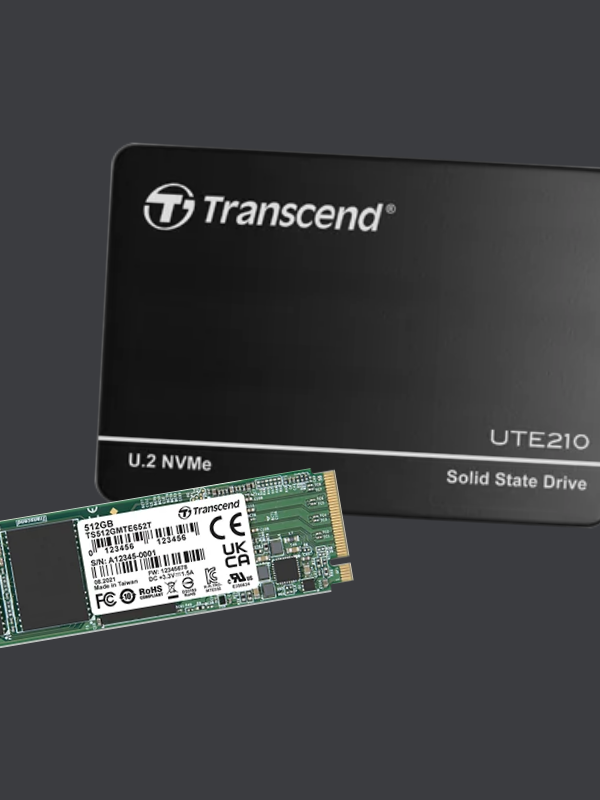
2.5" SATA SSD
Industrial 2.5" SATA SSDs from Transcend with SATA III 6Gb/s interfaces and advanced 3D NAND flash technology. Selected models feature wide operating temperature ranges of -40°C to +85°C, power loss protection, wear-leveling and S.M.A.R.T. monitoring to support reliable operation in demanding environments.
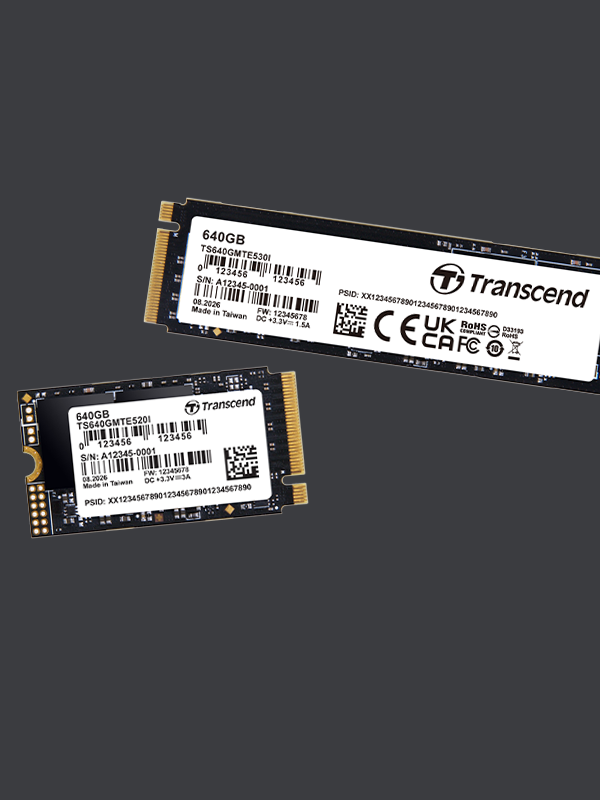
M.2 PCIe SSD
Transcend M.2 PCIe SSD cards are dedicated to maximizing system performance. Built with high-quality 3D NAND flash, some SSDs unleash up to 1TB of capacity for your computer, adding more storage space and enhancing computing efficiency.
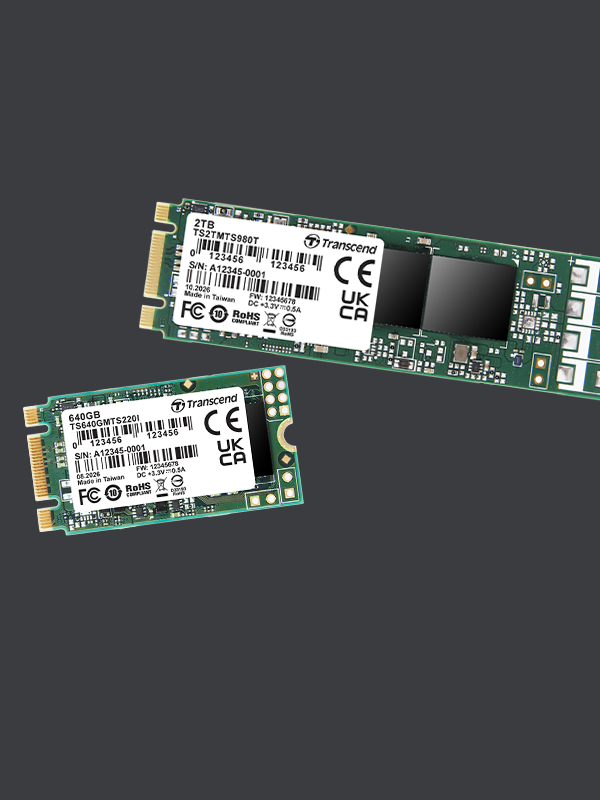
M.2 SATA SSD
Transcends M.2 SATA SSD cards are dedicated to maximizing high-performance computing.
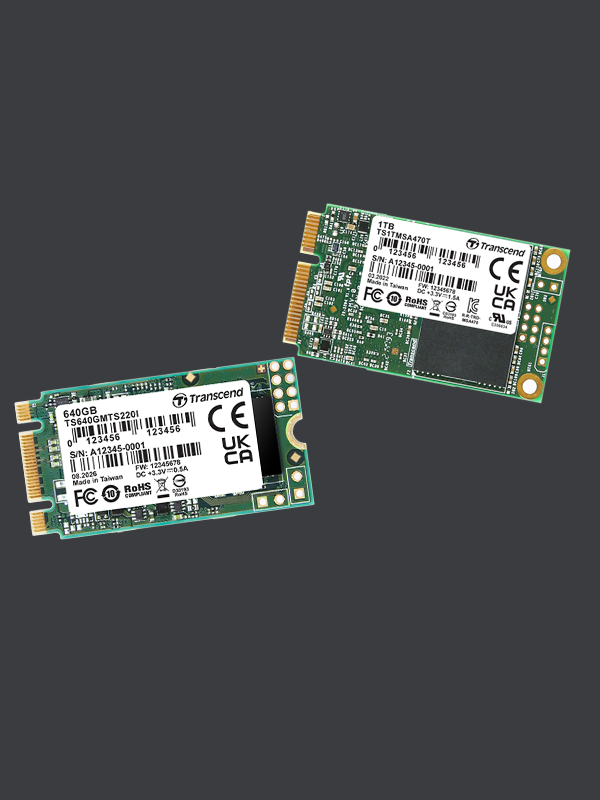
mSATA SSD
Transcend's mSATA SSDs industrial storage solutions have a compact mSATA form factor - just one-eighth the size of a standard 2.5" SSD with high storage efficiency.
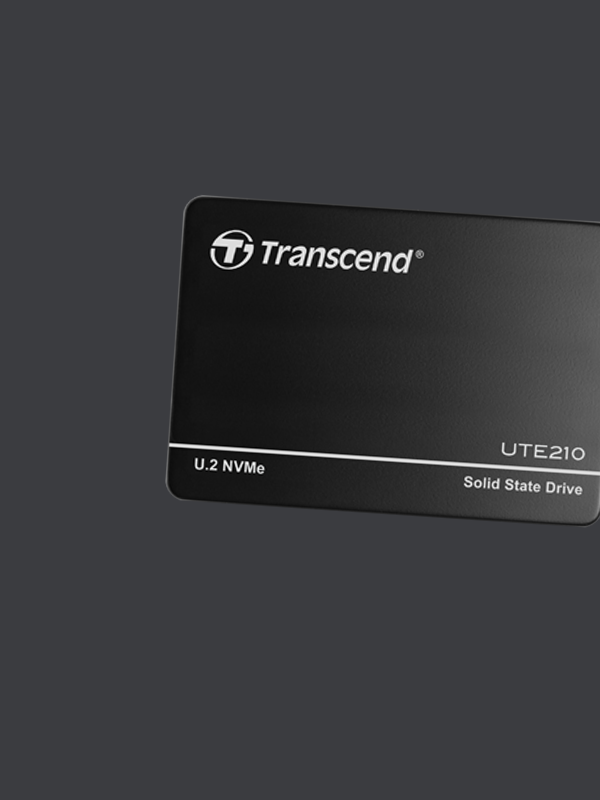
U.2 SSD
Transcend U.2 SSD industrial storage solutions guarantee data integrity and storage reliability to safeguard information during unexpected power outages and set new benchmarks in data transfer efficiency.
Which type of industrial SSD is the best fit for your application?
2.5″ SATA SSD is a practical choice for industrial computers, legacy system upgrades and applications where compatibility and reliability matter more than maximum transfer speeds. With a SATA III interface supporting up to 6 Gb/s, these SSDs offer stable performance and are easy to replace or upgrade.
The main advantages are broad compatibility, flexible storage capacities and straightforward installation. However, the larger physical size requires more space than compact SSD formats and the SATA interface limits performance compared to PCIe NVMe alternatives.
M.2 PCIe NVMe SSDs are designed for applications requiring high data transfer speeds and low latency. They are particularly suitable for edge AI, machine vision, industrial computing and systems processing large amounts of data.
By using the PCIe interface and NVMe protocol, M.2 PCIe SSDs deliver significantly higher performance than SATA-based solutions while maintaining a compact footprint. The trade-offs include higher power consumption and heat generation in high-performance models. They also require a compatible M.2 PCIe slot and sufficient thermal management.
M.2 SATA SSDs combine the familiar SATA interface with a space-saving design, making them suitable for embedded systems, compact Box PCs and industrial control equipment.
Their main benefits are low power consumption, compact dimensions and reliable performance for everyday industrial computing tasks. However, they are limited by SATA transfer speeds and cannot match the performance of NVMe SSDs. It is also important to verify motherboard compatibility, as not all M.2 slots support SATA.
mSATA SSDs are a good option for embedded computers and industrial equipment designed around the mSATA interface. Their small form factor makes them useful in compact systems where a traditional 2.5″ SSD would take up too much space.
They offer reliable SATA performance with a small footprint and are particularly valuable when maintaining or upgrading existing industrial hardware. The main limitation is compatibility: mSATA requires a dedicated interface and is less common in newer system designs.
U.2 SSDs are designed for applications that require high-speed data access, substantial storage capacity and reliable operation under intensive workloads. They are well suited for industrial servers, data acquisition systems, edge computing and applications involving large datasets.
Using PCIe NVMe technology, U.2 SSDs can deliver high transfer speeds while offering a more robust drive format with greater potential for heat dissipation than compact M.2 modules. They require more installation space and dedicated U.2-compatible connectivity, making them less suitable for small embedded devices.
Q&A about Industrial SSDs
An industrial solid-state drive (SSD) is a data storage device designed for reliable operation in demanding industrial environments.
Unlike traditional hard disk drives (HDDs), industrial SSDs use NAND flash memory with no moving parts. They offer fast data access, low power consumption and improved resistance to shock and vibration, making them suitable for industrial computers, embedded systems and automation equipment.
Industrial SSDs are designed for applications requiring long-term reliability, extended product availability and consistent performance.
Compared to consumer SSDs, industrial models may offer wider operating temperature ranges, higher endurance ratings, advanced error correction and power loss protection.
These features make industrial SSDs suitable for critical applications where data integrity and continuous operation are essential.
Transcend offers a wide range of industrial SSDs in different form factors and interfaces, including 2.5-inch SATA, M.2 SATA, M.2 PCIe NVMe, mSATA and U.2 SSDs.
These storage solutions are designed for industrial computers, embedded systems and applications requiring reliable data storage.
Depending on the model, Transcend industrial SSDs offer features such as wide operating temperature ranges, high endurance, power loss protection and advanced data management technologies.
Choosing the right industrial SSD depends on storage capacity, read and write speeds, endurance, interface compatibility and operating temperature.
For applications involving frequent data writing, SSD endurance ratings such as TBW (Terabytes Written) and DWPD (Drive Writes Per Day) are important considerations.
Additional features such as S.M.A.R.T. monitoring, wear leveling and power loss protection can help improve reliability and data integrity in industrial environments.
Find the Right SSD for Your Application
With our wide range of industrial and embedded SSDs from Transcend, we can help you find the right storage solution for your application. From storage capacity and performance to endurance, operating temperature and long-term availability, we help you select an SSD that meets your technical requirements.
Need help choosing the right industrial SSD? Our experts are here to he